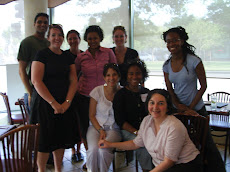
Yesterday, i was asked to teach a workshop to Iraqi refugees at the International rescue committee. I usually do one of these workshops every month or so as a way of giving back to my community. I was always well prepared, knew my material and delivered it to the best of my ability. Never did i receive as good a response as i did during yesterdays workshop. The topic was STIs, my audience was a group of conservative muslim women yet by using the techniques i learnt in this class, every woman in the class participated in the lesson plan, provided her opinion, and learned at least 3 new things. I was even pressured by the ladies into opening a female condom and demonstrating how its used. I dont think i would have known how to encourage participation and bring people out of thier shells if i hadnt taken this wonderful class.
The main reason I decided to register for this class 3 months ago was the health promotion portion. At the time, I was much more interested in community level social marketing and promotion and did not realize the class was mostly teaching health promotion at the individual level. Now i know that before i can expect to change community level attitudes and behaviors, i need to be able to do so for the person sitting infront of me.
Sunday, July 25, 2010


Saturday, July 24, 2010
Shelby Final
My initial post focused on my belief that a major barrier to teens' healthy sexualities was the taboo surrounding sex. I must say, it only takes 10 weeks of immersing yourself in an adolescent's world to realize that sex is perhaps the last thing they are afraid to talk about. And we have had a biased sample, with teen educators, and the well informed youth at Mary's Center, but I am beginning to doubt that a taboo is the problem. So with that in mind, I would like to go to the opposite end of the spectrum...perhaps all the talking they are doing is leading to misinformation, there's not a solid source. The telephone game effect. Everyone doesn't have a metro teen aids peer educator by their side at all times. Good education from reliable sources, delivered in a way that's understandable and easy on the eyes and ears lends well to a healthy sexuality. The end of abstinence only education doesn't hurt either. And free condoms.So I think we should keep talking about sex, safe sex that is, and making sure the conversation is factual.If there's one thing that could be improved upon further I would say add in cultural competence and the adolescents are golden. I have learned so much this semester and I am very happy I chose to take this class.
Shelby
Shelby
Sabrina's Final Reflection
When I first started this class, I identified some barriers to adolescents having a healthy sexuality; social norms, cultural and religious, and relationships with parents/caregivers. Now having completed the course, I have come to realize that all these health sexuality barriers can be addressed with the help of workshops teaching skill-building activities.
This class helped me to change my way of thinking about adolescents. The development of a youth's brain and other biological factors can affect how one learns and how they play a role in what they want to retain. The facilitating skills that the professors taught us on how to engage with adolescents really opened my eyes to how they learn and are exposed to information. Using Socio-drama techniques and other popular education is a fun, intriguing way to broach certain "sticky" topics and allow adolescents to understand what they need to. I have learned that adolescents are complex individuals and operate on many levels when it comes to learning new information and that there are many ways they can be taught. I understand more deeply that the needs of adolescents have to be understood before trying to educate on sexual health as well as understanding the social and cultural contexts. All levels of the ecological model have to be tapped when creating a workshop/program and that it is a difficult task making sure all of the levels are covered. By opening up adolescents' minds to their consequences of their choices, by starting with the "now" consequences and expanding onto the "future" consequences, I realize that direct methods, guidance, and steps are needed for them to follow the development of what facilitators are trying to teach.
Actually facilitating a workshop for the first time was indescribable. I enjoyed reaching out to the youth and having them participate in our skill-building activities. Knowing that they will take something away from a workshop that I helped facilitate with other incredible group members, is really rewarding and I appreciate that this class gave us that experience. I cannot wait to have the opportunity to do this again in the future.
Through this class, with more practice and development of my facilitation and presentation skills, I feel more confident in my ability to create and conduct workshops for adolescents, especially with some reserved topics, such as those on sexual health. I believe now that all adolescents need is exposure to accurate information and the opportunity to expand and develop on what they learned, in order to absorb this information and actually act on it in the future. I will recommend to anyone who has the opportunity to take a class on adolescent health promotion and skill building to do so; if in GWU, then definitely this one.
This class helped me to change my way of thinking about adolescents. The development of a youth's brain and other biological factors can affect how one learns and how they play a role in what they want to retain. The facilitating skills that the professors taught us on how to engage with adolescents really opened my eyes to how they learn and are exposed to information. Using Socio-drama techniques and other popular education is a fun, intriguing way to broach certain "sticky" topics and allow adolescents to understand what they need to. I have learned that adolescents are complex individuals and operate on many levels when it comes to learning new information and that there are many ways they can be taught. I understand more deeply that the needs of adolescents have to be understood before trying to educate on sexual health as well as understanding the social and cultural contexts. All levels of the ecological model have to be tapped when creating a workshop/program and that it is a difficult task making sure all of the levels are covered. By opening up adolescents' minds to their consequences of their choices, by starting with the "now" consequences and expanding onto the "future" consequences, I realize that direct methods, guidance, and steps are needed for them to follow the development of what facilitators are trying to teach.
Actually facilitating a workshop for the first time was indescribable. I enjoyed reaching out to the youth and having them participate in our skill-building activities. Knowing that they will take something away from a workshop that I helped facilitate with other incredible group members, is really rewarding and I appreciate that this class gave us that experience. I cannot wait to have the opportunity to do this again in the future.
Through this class, with more practice and development of my facilitation and presentation skills, I feel more confident in my ability to create and conduct workshops for adolescents, especially with some reserved topics, such as those on sexual health. I believe now that all adolescents need is exposure to accurate information and the opportunity to expand and develop on what they learned, in order to absorb this information and actually act on it in the future. I will recommend to anyone who has the opportunity to take a class on adolescent health promotion and skill building to do so; if in GWU, then definitely this one.
Amanda Asgeirsson's Final Reflection
Coming into this course, I had no idea what to expect. I didn't even realize that the course was about sexual health until I arrived at the first session. Although it wasn't the first thing that I really wanted to learn about, and teach others about, after learning the basics, doing a little research, and putting the topic into perspective through the assignments and the lessons, I was so ready to teach. I was excited to be in front of a group of adolescents again, and it was great to teach them about useful information. In the context of my group's presentation, I think it was really helpful to clarify to them what it really means to cross the line.
As a whole, it was really helpful to learn about what the other groups were teaching their students and the topics that they found most important. I love that this course was able to teach me how to work with people that I don't know, as the course was so short that you have a shorter time to get to know everyone.
In terms of my thoughts on sexual health, I think that some of my assumptions have been proven wrong and my eyes have been opened to the wealth of knowledge that adolescents already have about sexual health, whether it is through their parents, classroom, classmates, or older siblings. I think it was really interesting to see how many of the students did not even find the topic awkward, and it looked like some were genuinely interested.
Thanks for teaching me so much in this course!
As a whole, it was really helpful to learn about what the other groups were teaching their students and the topics that they found most important. I love that this course was able to teach me how to work with people that I don't know, as the course was so short that you have a shorter time to get to know everyone.
In terms of my thoughts on sexual health, I think that some of my assumptions have been proven wrong and my eyes have been opened to the wealth of knowledge that adolescents already have about sexual health, whether it is through their parents, classroom, classmates, or older siblings. I think it was really interesting to see how many of the students did not even find the topic awkward, and it looked like some were genuinely interested.
Thanks for teaching me so much in this course!
Friday, July 23, 2010
Susan's Final Reflection
When initially reflecting on the barriers teens face to having a healthy sexuality, I spent more time reflecting on the public health aspects and cultural influences affecting teens. This class and the ability to participate in the planning of a teen sexual health workshop has opened my eyes to the many other barriers teens face. Not having been a teen for a few years or even really spending that much time around teens in recent years, it’s easy to forget that the every day activities and decisions of being a teenager can be confusing and difficult to navigate. Choices of friends, clothes, activities all play into the environment and social behavior of teens. In order to help teens realize their potential for a healthy sexuality educators and facilitators have to be keenly aware of the complex dynamics of a teens life and lifestyle.
To find myself working directly with teens through the workshop was both intimidating and rewarding. It was an opportunity to put into practice the many lessons learned throughout the semester while being “tested” directly by the teens themselves. The classes leading up to the workshop more than adequately prepared me for the concepts and reasoning behind the types of activities we were conducting but the experience wouldn’t have been the same without the teens.
The teens we worked with reminded me of how intelligent, curious and insightful this age group can be. Some of them knew more about the topics we covered than individuals in some of my other courses. The main concept was one many of them seemed to be familiar with but I think we left them with some ideas to think about.
Through the experience of conducting the workshop with my group and from viewing the other groups in action I’ve become more confident that even with the barriers discussed originally, teens have the knowledge and ability to overcome some of these barriers in order to have a healthy sexuality. Media, education, and culture all influence a teen’s sexuality but so does personal determination and ability. This is not to say that these barriers do not exist or that these barriers are becoming easier to overcome for teens, but I have been reminded by this course that with assistance teens are better able to make progress against these barriers.
To find myself working directly with teens through the workshop was both intimidating and rewarding. It was an opportunity to put into practice the many lessons learned throughout the semester while being “tested” directly by the teens themselves. The classes leading up to the workshop more than adequately prepared me for the concepts and reasoning behind the types of activities we were conducting but the experience wouldn’t have been the same without the teens.
The teens we worked with reminded me of how intelligent, curious and insightful this age group can be. Some of them knew more about the topics we covered than individuals in some of my other courses. The main concept was one many of them seemed to be familiar with but I think we left them with some ideas to think about.
Through the experience of conducting the workshop with my group and from viewing the other groups in action I’ve become more confident that even with the barriers discussed originally, teens have the knowledge and ability to overcome some of these barriers in order to have a healthy sexuality. Media, education, and culture all influence a teen’s sexuality but so does personal determination and ability. This is not to say that these barriers do not exist or that these barriers are becoming easier to overcome for teens, but I have been reminded by this course that with assistance teens are better able to make progress against these barriers.
Khadijah Abdallah____Final Reflection
When I first wrote this personal refelction on challenges faced by adolescents to a health sexuality, the biggest issues I identified were the following:
1- Lack of good role models
2- The media and pop culture that glamorize it
3- Even the educational system is somewhat to blame
After the workshops, and after meeting and seeing different adolescents from all aspects of life, I was impressed with a lot of stuff. I was impressed that the adolescents knew more about the issue then I sometimes expected, especially in my own workshop when many of the teens would put forth hard scientific facts that even I had just found out recently or did not previously know. I still recall one of the participants in my workshop stating that MSM are more susceptible to HIV infection if they have unprotected sex due to purely biological reasons associated with anal intercouse. Or, the fact that 1 in 20 DC children are infected with HIV. Of course, the participant did not ramble on in that matter. But, seeing how they knew the seriousness of the issue, was pleasantly surprising, and proved to me that I really should not underestimate these adolescents. In the Bell Multicultural School workshop, I was impressed with how some of the students knew plenty about contraceptive use and the importance of a condom. Yet, I also found the shyness and the giggles that came forth during the role plays to emphasize the idea that they really are teenagers that are sometimes uncomfortable with this topic. They listened, though and were respectful if rambunctious at times.
Despite this, however, I still believe that the issues I identified in my initial post are essential to the some of the problems that exist today. The last point on the educational system was mostly emphasized to me through the both workshops that I attended. In the first workshop, the one in Bell Multicultural Highschool, this was evidenced through the questions that were asked, especially the one on whether or not the Plan B will ‘kill the baby’. Granted that I have seen some adults with the same sort of confusion, it struck me as a ‘normal’, and yet, I feel that had the basic educational system made up for the general lack of knowledge that exists on the matter, then perhaps there would not be this confusion. At the same time, though, the workshops also established the fact that there are resources available to facilitate communications and increase knowledge among adolescents on these important matters. Optimistically speaking, through the efforts of MetroTeen AIDS and after school programs such as the one in which we had the fortunate opportunity to participate in, I believe that better health outcomes will be achieved.
In addition to these workshops, the class itself was an interesting journey into the realm of adolescence. When I first started the class, I was terrifed at the prospect of having to facilitate a workshop and presenting to a group of teenagers on the topic of sexual health. Through what Professor Sara and Alice taught on methods and techniques for successfully conducting a workshop, I was able to calm down a bit and even become slightly excited at the prospect of participating in my very own workshop. The classes indicated that some of the general stereotypes that we all have about teenagers are true, but that interacting with them is not necessarily a terrifying experience equivalent to a day in boot camp. I believe the skills obtianed from this class are truly a useful lesson in communication, whether it be with adolescents or not.
1- Lack of good role models
2- The media and pop culture that glamorize it
3- Even the educational system is somewhat to blame
After the workshops, and after meeting and seeing different adolescents from all aspects of life, I was impressed with a lot of stuff. I was impressed that the adolescents knew more about the issue then I sometimes expected, especially in my own workshop when many of the teens would put forth hard scientific facts that even I had just found out recently or did not previously know. I still recall one of the participants in my workshop stating that MSM are more susceptible to HIV infection if they have unprotected sex due to purely biological reasons associated with anal intercouse. Or, the fact that 1 in 20 DC children are infected with HIV. Of course, the participant did not ramble on in that matter. But, seeing how they knew the seriousness of the issue, was pleasantly surprising, and proved to me that I really should not underestimate these adolescents. In the Bell Multicultural School workshop, I was impressed with how some of the students knew plenty about contraceptive use and the importance of a condom. Yet, I also found the shyness and the giggles that came forth during the role plays to emphasize the idea that they really are teenagers that are sometimes uncomfortable with this topic. They listened, though and were respectful if rambunctious at times.
Despite this, however, I still believe that the issues I identified in my initial post are essential to the some of the problems that exist today. The last point on the educational system was mostly emphasized to me through the both workshops that I attended. In the first workshop, the one in Bell Multicultural Highschool, this was evidenced through the questions that were asked, especially the one on whether or not the Plan B will ‘kill the baby’. Granted that I have seen some adults with the same sort of confusion, it struck me as a ‘normal’, and yet, I feel that had the basic educational system made up for the general lack of knowledge that exists on the matter, then perhaps there would not be this confusion. At the same time, though, the workshops also established the fact that there are resources available to facilitate communications and increase knowledge among adolescents on these important matters. Optimistically speaking, through the efforts of MetroTeen AIDS and after school programs such as the one in which we had the fortunate opportunity to participate in, I believe that better health outcomes will be achieved.
In addition to these workshops, the class itself was an interesting journey into the realm of adolescence. When I first started the class, I was terrifed at the prospect of having to facilitate a workshop and presenting to a group of teenagers on the topic of sexual health. Through what Professor Sara and Alice taught on methods and techniques for successfully conducting a workshop, I was able to calm down a bit and even become slightly excited at the prospect of participating in my very own workshop. The classes indicated that some of the general stereotypes that we all have about teenagers are true, but that interacting with them is not necessarily a terrifying experience equivalent to a day in boot camp. I believe the skills obtianed from this class are truly a useful lesson in communication, whether it be with adolescents or not.
Thursday, July 22, 2010
Timothy Kane: Final Relfection, Summer 2010
The four items I identified at the beginning of this class as barriers faced by teens toward a healthy sexuality included:
(1) Lack of communication and openness about sexuality leading to confusion and shame.
(2) Lack of role-models for sexual health, along with an omnipresent sexualized culture.
(3) High rates of childhood sexual abuse
(4) Impact of homophobia in relation to LGBTQ youth.
After participating in class discussions and interacting with and observing youth in class presentations, I have adjusted my thinking in a number of areas.
First, I gained personal knowledge of a variety of supportive venues through which youth can experience healthy, informative and open communication about sexuality. Specifically, I was impressed by the resource-rich environments of MetroTeen AIDS and Mary’s Center. Both venues offer youth diverse and staff-supported opportunities to ask questions about, learn information concerning and generally express freely their needs and wants regarding healthy sexuality. There also seem to be many peer-to-peer opportunities for youth to support each other, with the guidance and mentoring of professional staff.
Second, I did not witness first-hand the impact of homophobia as a barrier facing teens toward a healthy sexuality. The youth I engaged and observed seemed to be less impacted by homophobia than I originally projected. I did not engage or observe any LGBTQ-identified youth in the workshops, but again I was more impressed than not at the level of openness and awareness about LGBTQ issues expressed by the youth I did engage and observe in the workshops. There seems to exist much more acceptance and openness among DC youth about LGBTQ peers and issues than I had originally thought existed. Youth seemed to express supportive attitudes toward LGBTQ individuals or at least took a “live and let live” approach.
After engaging and observing the youth in our workshops, I still believe that youth lack role-models for sexual health and that they are vulnerable to an omnipresent sexualized culture. The youth at MetroTeen AIDS seemed especially burdened by the reality of modern-day DC sexual culture in that HIV is a major and common-place topic of discussion and concern. In addition, I heard comments from a number of youth in the workshops suggesting that they are familiar with childhood sexual abuse from personal experience. My sense is that childhood sexual abuse is a reality that some of the youth in the workshops are confronting. I am hopeful and grateful, however, that the youth have access to supportive and professional staff from schools and agencies to help them find their way to a healthy and happy future.
Finally, I have uncovered an entirely new and unanticipated learning outcome from my engagement with and observation of the youth in our workshops. I was impressed (almost stunned) at the amount of apparent learning that seemed to take place from our workshops in spite of all the distractions and “background noise” that seemed to be present. Somehow, the youth were able to identify, remember and repeat the salient points of the workshop topics, even when those points were not always expertly communicated within the workshops. I have concluded that I must never under-estimate the ability of youth to pick-up information from almost any source and that youth seem to be always listening even when they appear to tune-out the adults around them. What an impressive youth ability indeed...filled with tremendous potential for learning and growth!
(1) Lack of communication and openness about sexuality leading to confusion and shame.
(2) Lack of role-models for sexual health, along with an omnipresent sexualized culture.
(3) High rates of childhood sexual abuse
(4) Impact of homophobia in relation to LGBTQ youth.
After participating in class discussions and interacting with and observing youth in class presentations, I have adjusted my thinking in a number of areas.
First, I gained personal knowledge of a variety of supportive venues through which youth can experience healthy, informative and open communication about sexuality. Specifically, I was impressed by the resource-rich environments of MetroTeen AIDS and Mary’s Center. Both venues offer youth diverse and staff-supported opportunities to ask questions about, learn information concerning and generally express freely their needs and wants regarding healthy sexuality. There also seem to be many peer-to-peer opportunities for youth to support each other, with the guidance and mentoring of professional staff.
Second, I did not witness first-hand the impact of homophobia as a barrier facing teens toward a healthy sexuality. The youth I engaged and observed seemed to be less impacted by homophobia than I originally projected. I did not engage or observe any LGBTQ-identified youth in the workshops, but again I was more impressed than not at the level of openness and awareness about LGBTQ issues expressed by the youth I did engage and observe in the workshops. There seems to exist much more acceptance and openness among DC youth about LGBTQ peers and issues than I had originally thought existed. Youth seemed to express supportive attitudes toward LGBTQ individuals or at least took a “live and let live” approach.
After engaging and observing the youth in our workshops, I still believe that youth lack role-models for sexual health and that they are vulnerable to an omnipresent sexualized culture. The youth at MetroTeen AIDS seemed especially burdened by the reality of modern-day DC sexual culture in that HIV is a major and common-place topic of discussion and concern. In addition, I heard comments from a number of youth in the workshops suggesting that they are familiar with childhood sexual abuse from personal experience. My sense is that childhood sexual abuse is a reality that some of the youth in the workshops are confronting. I am hopeful and grateful, however, that the youth have access to supportive and professional staff from schools and agencies to help them find their way to a healthy and happy future.
Finally, I have uncovered an entirely new and unanticipated learning outcome from my engagement with and observation of the youth in our workshops. I was impressed (almost stunned) at the amount of apparent learning that seemed to take place from our workshops in spite of all the distractions and “background noise” that seemed to be present. Somehow, the youth were able to identify, remember and repeat the salient points of the workshop topics, even when those points were not always expertly communicated within the workshops. I have concluded that I must never under-estimate the ability of youth to pick-up information from almost any source and that youth seem to be always listening even when they appear to tune-out the adults around them. What an impressive youth ability indeed...filled with tremendous potential for learning and growth!
Felisa - Final Reflection
Two months ago, when this class began, I identified four primary barriers to healthy adolescent sexuality: the abstinence-only approach to sex education which denies youth the information they needed to make informed decisions; conflicting messages about sexuality from family and the media or peers; lack of access to contraception; and a focus on sexual risk behaviors instead of the development of healthy sexuality. As a result of this class, I can see that people are working in various ways to address each of these barriers. Additionally, I have been exposed to techniques that I personally can utilize to target different topics or populations. My favorites were creation of a sex plan and sociodrama.
For me, conducting the workshop was the highlight of the class. It felt good to directly target the barrier of lack of information about and access to contraception for the youth in the Bell Multicultural High School summer program. I was energized by their interest in the topic and their willingness to share their knowledge and acting skills with the others in the group. They were eager to learn about how contraceptives work, where they can obtain them, and how they can negotiate their use with their partners. By observing the other workshop, I got to see how adolescents process information and are in fact very perceptive. I found the youth very inspiring.
Although I still do not come across adolescents regularly, I am less afraid to interact with them as a result of this class. I understand that if I can work with them, or engage them in the task or conversation, they are likely to respond positively. A big lesson that I am taking from this class is the importance of allowing youth to provide input on the things that affect them. This learning will surely be applied in any adolescent programming I conduct in the future.
One of the things that I am still struggling with is how to be an effective health promoter without getting sucked into the multiple issues faced by youth. Alis and Sarah provided many examples of how youth may ask questions that reflect other challenging aspects of their living environment, family situation, or developmental process. We learned that it is important to acknowledge the issue raised, but focus on the element of health education in our responses. This is something that is particularly relevant for health educators who conduct workshops regularly as contact with youth and time may be limited. I’ve noted four barriers above, and my classmates have named many more. I understand the need to focus on the task at hand or fulfill the responsibilities of the role as a health educator, but I am a firm believer in the need for comprehensive approaches to behavioral change. I would be most satisfied working with youth in a capacity that allowed me to be part of a team that could meet several needs of youth instead of just their sexual health needs, although these are extremely important in my view.
I am encouraged that the Obama administration has eschewed abstinence-only education in favor of evidence-based interventions and believe that this will help adolescents avoid STIs and unintended pregnancy. One thing I think we as a society can do better is reframe adolescent sexuality as a natural and positive development instead of focusing on the potential negative consequences. With the skills I have gained in this class, I hope to work with others who share similar goals of improving adolescent sexual health within the larger context of positive youth development.
For me, conducting the workshop was the highlight of the class. It felt good to directly target the barrier of lack of information about and access to contraception for the youth in the Bell Multicultural High School summer program. I was energized by their interest in the topic and their willingness to share their knowledge and acting skills with the others in the group. They were eager to learn about how contraceptives work, where they can obtain them, and how they can negotiate their use with their partners. By observing the other workshop, I got to see how adolescents process information and are in fact very perceptive. I found the youth very inspiring.
Although I still do not come across adolescents regularly, I am less afraid to interact with them as a result of this class. I understand that if I can work with them, or engage them in the task or conversation, they are likely to respond positively. A big lesson that I am taking from this class is the importance of allowing youth to provide input on the things that affect them. This learning will surely be applied in any adolescent programming I conduct in the future.
One of the things that I am still struggling with is how to be an effective health promoter without getting sucked into the multiple issues faced by youth. Alis and Sarah provided many examples of how youth may ask questions that reflect other challenging aspects of their living environment, family situation, or developmental process. We learned that it is important to acknowledge the issue raised, but focus on the element of health education in our responses. This is something that is particularly relevant for health educators who conduct workshops regularly as contact with youth and time may be limited. I’ve noted four barriers above, and my classmates have named many more. I understand the need to focus on the task at hand or fulfill the responsibilities of the role as a health educator, but I am a firm believer in the need for comprehensive approaches to behavioral change. I would be most satisfied working with youth in a capacity that allowed me to be part of a team that could meet several needs of youth instead of just their sexual health needs, although these are extremely important in my view.
I am encouraged that the Obama administration has eschewed abstinence-only education in favor of evidence-based interventions and believe that this will help adolescents avoid STIs and unintended pregnancy. One thing I think we as a society can do better is reframe adolescent sexuality as a natural and positive development instead of focusing on the potential negative consequences. With the skills I have gained in this class, I hope to work with others who share similar goals of improving adolescent sexual health within the larger context of positive youth development.
Wednesday, July 21, 2010
Tahmina - Final Reflection
My initial reflection on ‘what barriers do teens face in having a healthy sexuality’ is still pretty much the same. However, as a result of all the knowledge, activities and assignments presented in this class, I have a much better ‘hands-on’ understanding and experience of even my own initial reflection.
One of the barriers I had mentioned in my initial reflection was ‘a lack of a comprehensive outlook.’ Instantly I think of points in class where this point was driven home. For instance, in one activity, we talked to a chair about what we would have wanted to know/do regarding a particular sexual matter as a youth. Reflecting on the shortcomings of your perspectives as a youth truly drives home how existing gaps in knowledge can be a barrier to really understanding and having a healthy sexuality. A lack of resources/people/approaches disseminating correct information does prevent an individual from a comprehensive outlook. It also emphasized how a lack of communication can impede the process. Another example of this was recognized in the workshop my group facilitated. Despite having an upper hand or understanding of safe sex, there were certain aspects of it, such as cultural competency, that they were learning in context to safe sex for the first time and hopefully this opened the door for a better understanding of future safe-sex situations they encounter.
Another barrier that I had mentioned was ‘differences in attitudes.’ Reflecting on this, I remember the agree/disagree activity from our first class and how the various responses on individual issues were expressed. Even as an adult, you can find yourself re-thinking the situation after hearing someone elses view on something or question the way you perceived it, so it was easy to just imagine how hard it is for youth, whose brain is still maturing, to hear different people tell them about sex. It can be quite a challenge deciding where you stand on issues especially if various people close to you feel differently. A lot of what youth feel on the individual level is a result of peers and family and this can serve as a barrier or advantage depending on how your environment helps you understand sexual issues. The activity in class where the fetus, doctor, boyfriend and mother were influencing a pregnant individuals choices also comes to mind. Also, what comes to mind is how, in the workshops presented and watched, youth had a different understanding of sexuality as a result of something they heard at one point or another. Differences in attitudes that correctly disseminate information can work to your advantage but oftentimes people playing different roles in your life don’t aren’t on the same page so it can confuse a youth even more on sensitive issues. Conversely, similar attitudes may provide a narrow judgmental view.
Last but not least, another barrier I mentioned was ‘challenging years that confound the process.’ This point was definitely driven home after witnessing the workshops in action. We truly forget how challenging youth can be. There does come a point in life where the problems that seem the biggest in the world or source of extreme emotion ‘unique only to you’ are forgotten or perceived less vividly. Seeing the interaction and noise between the youth at these workshops and just from stepping into that environment was like a flashback that provided a glimpse of what the trials and tribulations of being a teenager were, and I for one can’t say I’d want to go back, haha. An example of the way youth are impacted differently was also reflected in the responses youth gave in my workshop; some might have had a note of passion behind certain statements yet others imparted a similar response different in some aspects and still some uncommon responses were hesitantly expressed almost in reservation of the commonly expressed belief. It’s no wonder that barriers to healthy sexuality exist when there so much going on at the same time and ongoing processes unique to everyone around you play a role in the way you may or may not perceive things. Being a teenager and having more ‘blue’ or ‘red’ parts of the brain can be a barrier or advantage in and of itself.
This class was amazing. It should be packaged into some part of training required for youth workers. I sincerely feel more competent in aspects of interacting with youth and understanding the way things may be impacted by individual, interpersonal, community and socio-political factors. Admittedly, the workshop seemed intimidating but despite the challenges it was a great experience and it definitely equipped me with skills that I can enhance and realization of skills I need to work on. It was also very motivating to see youth respond in a positive way or for them to understand something as a result of something you did or said; it is inspiring to see that barriers can be overcome. However, the workshop did emphasize how support from all avenues must be at play in order for an individual to eliminate barriers to a healthy sexuality. The limitations of a workshop is that at the end of the day, despite the amazing knowledge you creatively administered and the encouraging responses it imparted, it is still just one component or intervention to assisting our youth communities in handling sexual issues. Comprehensive approaches (education, communication, resources, interaction) with sexual issues have to take suitably occur in all the important places in an individuals life (friends, family, school, community centers, religious organizations) in order for youth to comprehensively understand the bigger picture, help them identify where they stand, eliminate barriers and build a confident and healthy sexuality.
Thank you so much for such a great class! I was sure a 2.5 hour class on summer evenings for 10 weeks would be dreadful but you proved me wrong and facilitated a positive outcome! Now, if only we can do this for our communities of youth. :)
One of the barriers I had mentioned in my initial reflection was ‘a lack of a comprehensive outlook.’ Instantly I think of points in class where this point was driven home. For instance, in one activity, we talked to a chair about what we would have wanted to know/do regarding a particular sexual matter as a youth. Reflecting on the shortcomings of your perspectives as a youth truly drives home how existing gaps in knowledge can be a barrier to really understanding and having a healthy sexuality. A lack of resources/people/approaches disseminating correct information does prevent an individual from a comprehensive outlook. It also emphasized how a lack of communication can impede the process. Another example of this was recognized in the workshop my group facilitated. Despite having an upper hand or understanding of safe sex, there were certain aspects of it, such as cultural competency, that they were learning in context to safe sex for the first time and hopefully this opened the door for a better understanding of future safe-sex situations they encounter.
Another barrier that I had mentioned was ‘differences in attitudes.’ Reflecting on this, I remember the agree/disagree activity from our first class and how the various responses on individual issues were expressed. Even as an adult, you can find yourself re-thinking the situation after hearing someone elses view on something or question the way you perceived it, so it was easy to just imagine how hard it is for youth, whose brain is still maturing, to hear different people tell them about sex. It can be quite a challenge deciding where you stand on issues especially if various people close to you feel differently. A lot of what youth feel on the individual level is a result of peers and family and this can serve as a barrier or advantage depending on how your environment helps you understand sexual issues. The activity in class where the fetus, doctor, boyfriend and mother were influencing a pregnant individuals choices also comes to mind. Also, what comes to mind is how, in the workshops presented and watched, youth had a different understanding of sexuality as a result of something they heard at one point or another. Differences in attitudes that correctly disseminate information can work to your advantage but oftentimes people playing different roles in your life don’t aren’t on the same page so it can confuse a youth even more on sensitive issues. Conversely, similar attitudes may provide a narrow judgmental view.
Last but not least, another barrier I mentioned was ‘challenging years that confound the process.’ This point was definitely driven home after witnessing the workshops in action. We truly forget how challenging youth can be. There does come a point in life where the problems that seem the biggest in the world or source of extreme emotion ‘unique only to you’ are forgotten or perceived less vividly. Seeing the interaction and noise between the youth at these workshops and just from stepping into that environment was like a flashback that provided a glimpse of what the trials and tribulations of being a teenager were, and I for one can’t say I’d want to go back, haha. An example of the way youth are impacted differently was also reflected in the responses youth gave in my workshop; some might have had a note of passion behind certain statements yet others imparted a similar response different in some aspects and still some uncommon responses were hesitantly expressed almost in reservation of the commonly expressed belief. It’s no wonder that barriers to healthy sexuality exist when there so much going on at the same time and ongoing processes unique to everyone around you play a role in the way you may or may not perceive things. Being a teenager and having more ‘blue’ or ‘red’ parts of the brain can be a barrier or advantage in and of itself.
This class was amazing. It should be packaged into some part of training required for youth workers. I sincerely feel more competent in aspects of interacting with youth and understanding the way things may be impacted by individual, interpersonal, community and socio-political factors. Admittedly, the workshop seemed intimidating but despite the challenges it was a great experience and it definitely equipped me with skills that I can enhance and realization of skills I need to work on. It was also very motivating to see youth respond in a positive way or for them to understand something as a result of something you did or said; it is inspiring to see that barriers can be overcome. However, the workshop did emphasize how support from all avenues must be at play in order for an individual to eliminate barriers to a healthy sexuality. The limitations of a workshop is that at the end of the day, despite the amazing knowledge you creatively administered and the encouraging responses it imparted, it is still just one component or intervention to assisting our youth communities in handling sexual issues. Comprehensive approaches (education, communication, resources, interaction) with sexual issues have to take suitably occur in all the important places in an individuals life (friends, family, school, community centers, religious organizations) in order for youth to comprehensively understand the bigger picture, help them identify where they stand, eliminate barriers and build a confident and healthy sexuality.
Thank you so much for such a great class! I was sure a 2.5 hour class on summer evenings for 10 weeks would be dreadful but you proved me wrong and facilitated a positive outcome! Now, if only we can do this for our communities of youth. :)
Jill - Final Reflection
This course had provided me with a new appreciation for health educators, and for their students. It is clear that adolescents are receptive to being taught about sex, its role in relationships, and healthy practices. What is also clear is that they will all have a different perspective as to how relationships are structured, therefore shifting the role that sex may take, and potentially affecting how certain healthy behaviors are viewed or practiced.
It seemed as though there is more information readily available than I had thought at first, with more education provided in-school, as well as centers within the community open to adolescents from a diverse spectrum of backgrounds. What I really appreciated was that the ideas of healthy behaviors, including prevention of STIs and pregnancy, were put into context. There was no abstract general blanket statement of prevention thrown down, every possible scenario was detailed to fit a particular situation. The specificity of our workshops helped me to realize how health education works in a real-life setting.
Earlier, I had thought that there would be many barriers in place, and have learned that there are many resources to help overcome them. Additionally, the information received from the various resources appears to be consistent, not conflicting, therefore contributing to a solid education in healthy behaviors.
It seemed as though there is more information readily available than I had thought at first, with more education provided in-school, as well as centers within the community open to adolescents from a diverse spectrum of backgrounds. What I really appreciated was that the ideas of healthy behaviors, including prevention of STIs and pregnancy, were put into context. There was no abstract general blanket statement of prevention thrown down, every possible scenario was detailed to fit a particular situation. The specificity of our workshops helped me to realize how health education works in a real-life setting.
Earlier, I had thought that there would be many barriers in place, and have learned that there are many resources to help overcome them. Additionally, the information received from the various resources appears to be consistent, not conflicting, therefore contributing to a solid education in healthy behaviors.
Marisa S. Final Reflection- Summer 2010
I enjoyed participating in the adolescent health promotion class this summer. I not only learned about valuable techniques for education adolescents, but I also gained invaluable experience during the workshops. While I was slightly intimated by the thought of giving a workshop with a group of my peers to a classroom of adolescents, I think it was a really good experience.
It felt really good to be an educator and promoter of positive lessons and important sexual health information.
I think there are still many barriers that adolescents face when it comes to having a healthy sexuality including their relationships with their parents, as well as, what/how the media portrays as appropriate behavior. However, after looking back on my initial reflection I think that I have a better understanding of what it means to be an adolescent and how they process information and go through everyday life. While from the outside they appear as though they don’t care or aren’t paying attention, they are actually in-tune with their surroundings and they are processing everything that is coming their way. I think this was especially apparent in the workshops. Even when we didn’t think they were the slightest bit interested or paying attention to anything we were trying to teach them, at the end each group reiterated the key themes and lessons we had wanted them to learn.
In one class session we went through an exercise where we took positive baggage and left our negative baggage behind. I think this definitely happened for me during the workshops. My baggage that I wanted to leave behind was that adolescents are intimidating and hard to ‘control’ or teach because they are ‘difficult.’ My fears about adolescents were put to rest during the workshop experience. I was relieved to see that they were actually interested in the topics that each workshop discussed and didn’t try to blow us off because we were yet another set of ‘educators’ coming to tell them more information. I think we as adults forget sometimes that while this is all old information to us, it is really new to a lot of the youth we encountered and they haven’t had the same experiences and don’t have the same knowledge base as us. But despite their lack of information, they want to learn and they want to know more.
Again, the class was an overall good experience and I look forward to being able to use the techniques I learned through this course in my future endeavors.
It felt really good to be an educator and promoter of positive lessons and important sexual health information.
I think there are still many barriers that adolescents face when it comes to having a healthy sexuality including their relationships with their parents, as well as, what/how the media portrays as appropriate behavior. However, after looking back on my initial reflection I think that I have a better understanding of what it means to be an adolescent and how they process information and go through everyday life. While from the outside they appear as though they don’t care or aren’t paying attention, they are actually in-tune with their surroundings and they are processing everything that is coming their way. I think this was especially apparent in the workshops. Even when we didn’t think they were the slightest bit interested or paying attention to anything we were trying to teach them, at the end each group reiterated the key themes and lessons we had wanted them to learn.
In one class session we went through an exercise where we took positive baggage and left our negative baggage behind. I think this definitely happened for me during the workshops. My baggage that I wanted to leave behind was that adolescents are intimidating and hard to ‘control’ or teach because they are ‘difficult.’ My fears about adolescents were put to rest during the workshop experience. I was relieved to see that they were actually interested in the topics that each workshop discussed and didn’t try to blow us off because we were yet another set of ‘educators’ coming to tell them more information. I think we as adults forget sometimes that while this is all old information to us, it is really new to a lot of the youth we encountered and they haven’t had the same experiences and don’t have the same knowledge base as us. But despite their lack of information, they want to learn and they want to know more.
Again, the class was an overall good experience and I look forward to being able to use the techniques I learned through this course in my future endeavors.
Heather's Final Reflection
This has been a great class – one of my favorites by far at GWU. I have really learned a great deal about how to conduct workshops with youth in general; how to tailor workshops to certain groups; how to be open and communicate effectively; and how to express my views openly, while still appreciating the views of others. This class not only focuses on adolescent health promotion, but I think it has also allowed all of us in the class to ponder our own ways of thinking and our own viewpoints and to become more in tune with them.
Our initial blog post was focused on what we think barriers to a healthy sexuality are. I still hold the same beliefs the barriers consist of: a lack of adequate health education, parental attitudes and beliefs, religious views, and a lack of access to contraceptives. Unfortunately, despite the class and what we have learned, these problems still persist. However, now each of us are equipped with the skills to conduct workshops and better promote youth health, I believe we are one step closer to overcoming some of these barriers. Though people will still have their various viewpoints, those views can at least be opened and explored through the use of workshops and by giving adolescents the ability to learn and form views of their own.
Our initial blog post was focused on what we think barriers to a healthy sexuality are. I still hold the same beliefs the barriers consist of: a lack of adequate health education, parental attitudes and beliefs, religious views, and a lack of access to contraceptives. Unfortunately, despite the class and what we have learned, these problems still persist. However, now each of us are equipped with the skills to conduct workshops and better promote youth health, I believe we are one step closer to overcoming some of these barriers. Though people will still have their various viewpoints, those views can at least be opened and explored through the use of workshops and by giving adolescents the ability to learn and form views of their own.
Wednesday, May 26, 2010
Jill's Initial Reflection
Regarding adolescent health, and promoting sexual health, I believe that it is largely a matter of education. Once equipped with the necessary information, adolescents will have a foundation on which to base sound choices regarding their individual health. This is not to say that simply providing information will do the trick; adolescents must be engaged, they must demonstrate their ability to apply their knowledge, and they must have role models who emulate healthy beliefs and behaviors. This is very easy to say, and quite difficult to observe in the real world. What I have in mind is both formal/classroom education, and informal education; this can include through the media, peers, and through the family.
I think there is fear regarding talking about sex, there could be embarrassment, confusion, or a host of other feelings and associations. Each adolescent's situation will differ from the next. This being the case, education must be structured to overcome a variety of barriers. Potential barriers could be familial, cultural, religious, SES (as it could relate to other barriers). Where and how information is delivered could ultimately lead to overcoming barriers, or molding the curriculum to ascribe to them.
Another barrier is a potentially restricted view on what constitutes sexual health. Many may just apply the term referring to family planning and disease prevention, but I think it encompasses more, such as sexuality, sexual orientation, beliefs and related behaviors, self-esteem, and many other topics.
Given the many sources of information, and the barriers unique to each of them, there is likelihood of an adolescent receiving conflicting or confusing information at some point. I don't have a good idea of what proper resolution looks like, but hope that it includes being comfortable with asking questions, and having a trusted figure to turn to.
I think there is fear regarding talking about sex, there could be embarrassment, confusion, or a host of other feelings and associations. Each adolescent's situation will differ from the next. This being the case, education must be structured to overcome a variety of barriers. Potential barriers could be familial, cultural, religious, SES (as it could relate to other barriers). Where and how information is delivered could ultimately lead to overcoming barriers, or molding the curriculum to ascribe to them.
Another barrier is a potentially restricted view on what constitutes sexual health. Many may just apply the term referring to family planning and disease prevention, but I think it encompasses more, such as sexuality, sexual orientation, beliefs and related behaviors, self-esteem, and many other topics.
Given the many sources of information, and the barriers unique to each of them, there is likelihood of an adolescent receiving conflicting or confusing information at some point. I don't have a good idea of what proper resolution looks like, but hope that it includes being comfortable with asking questions, and having a trusted figure to turn to.
Susan's Initial Reflection
There are many barriers teens face to having a healthy sexuality. These factors vary from country to country and culture to culture, but common themes and difficulties appear to be present. So many things are at play when evaluating a teen’s sexuality that looking at one barrier exclusively cannot provide a comprehensive view of the health of the individual teen. Additionally, sexuality can be defined broadly or individually and therefore defining a healthy sexuality can often be difficult.
In most societies the popular media plays a large role in preventing teens from having a healthy sexuality. Media such as television, print and music all portray images of certain types of perfection which is not always obtainable for many teens. With all these different images it would appear difficult for teens to identify what is a healthy sexuality and then embody this type of sexuality themselves. Convoluted ideals and images hinder teens from creating a sexual identity for themselves which is personal and ultimately valued.
Lack of education in what a healthy sexuality may mean for a teen also serves as a barrier. If teens do not have access to the education required to lead a life including healthy sexual behaviors they are unprepared to engage in a lifestyle of being safe and sexually active. Without proper education on both how to protect oneself and how to engage in a healthy lifestyle teens do not have the mechanisms to engage in a healthy sexual life.
As stated earlier, there are many factors which contribute to achieving a healthy sexuality. The media and education play a large role in shaping a teen’s sexuality, but cultural norms and family also play a great role in sexual identity and a healthy concept of sexuality. I believe so many factors contribute to a healthy sexuality and none of them can be considered alone when trying to understand one’s own sexual identity and health. Further, I believe body image plays a role in a healthy sexuality.
Additionally, the recognition of the multitude of changes being experienced by teens at this stage in life can greatly affect their outlook and sexuality. Confidence in one’s body while fitting within social expectations can determine a teen’s ability to view their sexuality in a healthy way and promote healthy behaviors in general.
In most societies the popular media plays a large role in preventing teens from having a healthy sexuality. Media such as television, print and music all portray images of certain types of perfection which is not always obtainable for many teens. With all these different images it would appear difficult for teens to identify what is a healthy sexuality and then embody this type of sexuality themselves. Convoluted ideals and images hinder teens from creating a sexual identity for themselves which is personal and ultimately valued.
Lack of education in what a healthy sexuality may mean for a teen also serves as a barrier. If teens do not have access to the education required to lead a life including healthy sexual behaviors they are unprepared to engage in a lifestyle of being safe and sexually active. Without proper education on both how to protect oneself and how to engage in a healthy lifestyle teens do not have the mechanisms to engage in a healthy sexual life.
As stated earlier, there are many factors which contribute to achieving a healthy sexuality. The media and education play a large role in shaping a teen’s sexuality, but cultural norms and family also play a great role in sexual identity and a healthy concept of sexuality. I believe so many factors contribute to a healthy sexuality and none of them can be considered alone when trying to understand one’s own sexual identity and health. Further, I believe body image plays a role in a healthy sexuality.
Additionally, the recognition of the multitude of changes being experienced by teens at this stage in life can greatly affect their outlook and sexuality. Confidence in one’s body while fitting within social expectations can determine a teen’s ability to view their sexuality in a healthy way and promote healthy behaviors in general.
Heather's Initial Reflection
What barriers do teens face to having a healthy sexuality?
While thinking this question over, I asked a friend for his opinion and he said: how do you define a healthy sexuality? I responded it can be whatever you want it to be; whatever your opinion is. Without knowing what a healthy sexuality is though, how do we determine the barriers to achieving it, and how do we then overcome the barriers?
To me, having a healthy sexuality is being in tune with your body, knowing what sex is, and not just intercourse, but understanding all sexual activity is part of sexuality, the emotions involved with having sex, and how to do it all in a safe way, both physically and emotionally. My state of mind regarding sexuality is a lot different now, though, then when I was a teen, and I think this in itself is a barrier. I do not believe all teens are aware of everything which goes into having a healthy sexuality and the benefits and consequences of engaging in sexual activity. This awareness is hindered by a lack of adequate health education, parental attitudes and beliefs, religious views, and a lack of access to contraceptives.
Health education in the U.S. is greatly lacking. Schools are constantly dealing with funding shortfalls and with emphasis on testing standards many schools decrease their health education courses. This directly effects what adolescents learn about sexuality because there often isn’t enough time in the class period to cover every health topic or to cover it in depth. Furthermore, many parents do not believe sex education should be taught in schools or it should only focus on abstinence and not on other healthy sexual behaviors. Religious views present the same problem. The Church constantly preaches abstinence without acknowledging everyone does not abide by such strict doctrines and need to be educated on alternative ways to have safe sex. This creates a dichotomy for teens, who do not know whether it is correct to abstain or to engage and if they want to engage, they might not be equipped with the knowledge on what is safe and what isn’t. Some teens may not engage in intercourse because of the stigmas associated with it or the beliefs their parents place on them, but will engage in other sexual activities and may not do it in a safe way, jeopardizing their health. There is also a lack of easy access to contraceptives. Many pharmacies and stores keeps condoms locked, which makes it difficult for teens to access them, either due to the burden of going to the counter asking for the key and returning to get the condoms or because of the embarrassment or stigmas attached with purchasing them. Birth control is also expensive, even with insurance, which can deter teens, who may not have their own income from obtaining it.
I think it is important for people to hold a wide view of what a healthy sexuality is and to not force their opinions on others. No matter what each individual or each group believes, there will always be someone who holds a different opinion. The consequences which can come with having an unhealthy sexuality are far too great to hope adolescents will fulfill a one size fits all model.
While thinking this question over, I asked a friend for his opinion and he said: how do you define a healthy sexuality? I responded it can be whatever you want it to be; whatever your opinion is. Without knowing what a healthy sexuality is though, how do we determine the barriers to achieving it, and how do we then overcome the barriers?
To me, having a healthy sexuality is being in tune with your body, knowing what sex is, and not just intercourse, but understanding all sexual activity is part of sexuality, the emotions involved with having sex, and how to do it all in a safe way, both physically and emotionally. My state of mind regarding sexuality is a lot different now, though, then when I was a teen, and I think this in itself is a barrier. I do not believe all teens are aware of everything which goes into having a healthy sexuality and the benefits and consequences of engaging in sexual activity. This awareness is hindered by a lack of adequate health education, parental attitudes and beliefs, religious views, and a lack of access to contraceptives.
Health education in the U.S. is greatly lacking. Schools are constantly dealing with funding shortfalls and with emphasis on testing standards many schools decrease their health education courses. This directly effects what adolescents learn about sexuality because there often isn’t enough time in the class period to cover every health topic or to cover it in depth. Furthermore, many parents do not believe sex education should be taught in schools or it should only focus on abstinence and not on other healthy sexual behaviors. Religious views present the same problem. The Church constantly preaches abstinence without acknowledging everyone does not abide by such strict doctrines and need to be educated on alternative ways to have safe sex. This creates a dichotomy for teens, who do not know whether it is correct to abstain or to engage and if they want to engage, they might not be equipped with the knowledge on what is safe and what isn’t. Some teens may not engage in intercourse because of the stigmas associated with it or the beliefs their parents place on them, but will engage in other sexual activities and may not do it in a safe way, jeopardizing their health. There is also a lack of easy access to contraceptives. Many pharmacies and stores keeps condoms locked, which makes it difficult for teens to access them, either due to the burden of going to the counter asking for the key and returning to get the condoms or because of the embarrassment or stigmas attached with purchasing them. Birth control is also expensive, even with insurance, which can deter teens, who may not have their own income from obtaining it.
I think it is important for people to hold a wide view of what a healthy sexuality is and to not force their opinions on others. No matter what each individual or each group believes, there will always be someone who holds a different opinion. The consequences which can come with having an unhealthy sexuality are far too great to hope adolescents will fulfill a one size fits all model.
Subscribe to:
Comments (Atom)