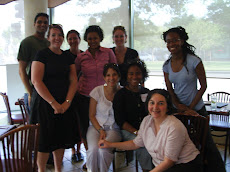
1) How did this class impact you both as a health professional and personally?
This course has really allowed me to open up to the idea that it is possible to empower adolescents to assert and recognize their rights as young people in society that often neglects to hear their piece in decision making. I used to shy away from dealing with adolescents, thinking that they had either A) made up their own minds about what behaviors they practice and B) who could influence them in their life. I view myself as a sort of outsider, especially as an ER nurse. My advice and instructions pertaining to their health are often met with diverted eyes and crossed arms. This age group usually presents to the ED with injuries or sexual health issues, so while I enjoy the opportunity to intervene and help give healthcare to this population, I often felt that my efforts where lost or blocked by other messages from peers or family. Now I realize how important adult (especially young adult) contact are in these people's lives. Meeting Adrian, Sheena, Alis and Sara really allowed me to see how valuable providing interventions and guidance to teens can be. I know now that when I deal with teens, I will operate without assumptions that my help doesn't matter and that teens certainly feel the gravity of their decisions reguarding reproductive health in particular.
2) How do you see this topic fitting into your career? that is, how do you envision applying what you've learned into your career?
I have this dream that I will work with sex workers and young women in ensuring they have access to safe, affordable sexual health services and agency to make their own decisions in intimate relationships. I hoped that I could learn how to specifically target teens, as they are at the cusp of their reproductive years. This course has definately given me a toolkit with which to work with adolescents in the future. By allowing them to decide how it is they take charge of their own health behaviors and rights, even in the face of gender inequality and economic adversity I hope to help people when they are vulnerable and still developing (yet strong independent individuals).
I only checked blackboard and assumed the due date would be Wed, but this was a silly assumption! I apologize for my seeming rude...I heart this course!
Kate D
Sunday, June 29, 2008


Saturday, June 28, 2008
Vishal's Final Thoughts
Sorry for posting this a day late, but my internet was down all day yesterday, and we just got Verizon to fix it this morning.
As for this class, I think I might have gained the most in here in comparison to my other courses here at GW. Having a 14 year old sister has given me some exposure to dealing with the current generation of adolescents (which is significantly different than my generation, even though I was one not too long ago). However, I had very little experience working with adolescents from an urban setting, and was surprised with the how they responded to our sessions. I definitely think that adolescents are willing to talk about and learn more about health issues than we (adults) think they are. I think the PH community needs to focus on this age group because they are the future, and helping them make healthier choices now, will benefit everyone down the road.
As for fitting adolescents into my career, I don’t see this happening for some time. Wanting to continue in health care consulting, I don’t see many opportunities for working for adolescent health, largely due to the lack of focus that is geared towards them in main stream medicine. However, I will want to go back to making adolescent health a priority later in my career when I hope to be working in healthcare/hospital admin. At that point, I will hopefully be in a position which allows me to have more input in how things are run, and like I mentioned before, improving the health of the country’s youth is essential for the future since they are the ones that will be taking over once the current generation becomes too old.
Thanks Alis and Sara, this was a great class!
Vishal
As for this class, I think I might have gained the most in here in comparison to my other courses here at GW. Having a 14 year old sister has given me some exposure to dealing with the current generation of adolescents (which is significantly different than my generation, even though I was one not too long ago). However, I had very little experience working with adolescents from an urban setting, and was surprised with the how they responded to our sessions. I definitely think that adolescents are willing to talk about and learn more about health issues than we (adults) think they are. I think the PH community needs to focus on this age group because they are the future, and helping them make healthier choices now, will benefit everyone down the road.
As for fitting adolescents into my career, I don’t see this happening for some time. Wanting to continue in health care consulting, I don’t see many opportunities for working for adolescent health, largely due to the lack of focus that is geared towards them in main stream medicine. However, I will want to go back to making adolescent health a priority later in my career when I hope to be working in healthcare/hospital admin. At that point, I will hopefully be in a position which allows me to have more input in how things are run, and like I mentioned before, improving the health of the country’s youth is essential for the future since they are the ones that will be taking over once the current generation becomes too old.
Thanks Alis and Sara, this was a great class!
Vishal
Friday, June 27, 2008
Final post - from Katherine
I was thinking about the final posting questions and about the Metro Teen AIDS workshop yesterday, and was reflecting on the feedback Alis, Sara and all of us offered as a part of our post-mortem sessions. And I was thinking about the differences between teaching in a classroom and teaching a workshop.
One of the biggest things I struggled with as a teacher was consistently designing lessons, evaluations, and assignments that were effective learning experiences. As with many jobs, there are times when just getting through the day is a top priority -- making sure that every kid gets michondrial streaming or whatever topic might fall by the wayside. But you do see the kids EVERY DAY (sometimes more than once a day!) and so the BIG stuff gets hammered home. In these workshops, you have a short amount of time and it's about HEALTH, a subject that needs to go right the first time. You might not be working with these kids again, or when you do, one of them might have already gotten pregnant, or entered an abusive relationship, or gotten HIV. It sounds depressing, doesn't it? But it's not -- it's a positive challenge. How can we get good enough at working with kids and get informed enough and creative enough to make each minute count double -- no matter how many or how few we have?
As far as my career concerns, one of the things we look at in my work in alcohol policy is "unintended outcomes" of certain policies. One of the worst is when taxation or pricing controls are hiked steeply, illegal production and selling spikes, which often leads to a lot of poisoning deaths. What is always interesting to me about these is that we create policy (e.g., HPV vaccination mandates) with a specific intended outcome in mind (lessened rates of HPV and cervical cancer). But we don't always see the unintended outcomes that are possible because we've been looking at the problem as a PH problem for too long -- we need new eyes to look at the issues. Adolescents have some of the freshest eyes (and freest mouths) around. One of the projects I'm interested in taking on is an interview project, talking to adolescents about various health policy issues. Adolescents have an honesty and a clarity that adults, unfortunately, often lose. I've got a few of my former students roped in, and I'm really eager to see the fruit that work bears.
Those were pretty vague answers... but after six weeks with me, maybe that's not a surprise. I really enjoyed the class!
One of the biggest things I struggled with as a teacher was consistently designing lessons, evaluations, and assignments that were effective learning experiences. As with many jobs, there are times when just getting through the day is a top priority -- making sure that every kid gets michondrial streaming or whatever topic might fall by the wayside. But you do see the kids EVERY DAY (sometimes more than once a day!) and so the BIG stuff gets hammered home. In these workshops, you have a short amount of time and it's about HEALTH, a subject that needs to go right the first time. You might not be working with these kids again, or when you do, one of them might have already gotten pregnant, or entered an abusive relationship, or gotten HIV. It sounds depressing, doesn't it? But it's not -- it's a positive challenge. How can we get good enough at working with kids and get informed enough and creative enough to make each minute count double -- no matter how many or how few we have?
As far as my career concerns, one of the things we look at in my work in alcohol policy is "unintended outcomes" of certain policies. One of the worst is when taxation or pricing controls are hiked steeply, illegal production and selling spikes, which often leads to a lot of poisoning deaths. What is always interesting to me about these is that we create policy (e.g., HPV vaccination mandates) with a specific intended outcome in mind (lessened rates of HPV and cervical cancer). But we don't always see the unintended outcomes that are possible because we've been looking at the problem as a PH problem for too long -- we need new eyes to look at the issues. Adolescents have some of the freshest eyes (and freest mouths) around. One of the projects I'm interested in taking on is an interview project, talking to adolescents about various health policy issues. Adolescents have an honesty and a clarity that adults, unfortunately, often lose. I've got a few of my former students roped in, and I'm really eager to see the fruit that work bears.
Those were pretty vague answers... but after six weeks with me, maybe that's not a surprise. I really enjoyed the class!
Reflection 2
1) how did this class impact you both as a health professional and personally?
I think it is too soon to be able to fully comprehend how this course has impacted me. I could share a description of my immediate impressions, but they would only be superficial. A more salient question I think would be how this experience has shaped my approach to public health or my personal philosophy. Maybe end the end it’s the same question… One positive effect of this course was that it reemphasized the importance of “public healthers”, PHrs for short to get out of the class room and into the environment where they are striving to foster change. I think most importantly, that this course left me with numerous questions.
This course got me thinking about how PHrs approach to “health education” or “health interventions” run the risk of becoming counterintuitive. I will use the original Nintendo video game “Space Invaders” as my analogy. Often PHrs approach public health in local communities especially vulnerable communities, like “Space Invaders”. PHrs pilot armed spaceships while shooting their “magic bullets”, the solution/health intervention/message, at a wall of alien targets.
My first question is, is the “public health crisis” extrapolated by PHrs’ the real problem or is it just a cumulative effect of numerous circumstances that are the target audiences reality? How can PHrs really understand a community’s issues if their target population is viewed as “alien” or other? Can public health officials really facilitate change by throwing “authoritative” messages, i.e. I know what is best for your health, you should not do xyz, and you should do xyz.
PHRs become too comfortable remaining inside the “safety” of their armored battleships. The ship acts as a metaphorical barrier between us and them or them and us. Sometimes that barrier is physical for instance not visiting or interacting with target communities or it could be abstract in terms of distancing by education or class. Although PH’rs have good intentions, good intentions may be inadequate to foster lasting change.
Two of my concluding immediate responses to this class are that it reaffirmed my belief that sustainable change has to come from the inside out not vice versa. The people who are directly impacted by whatever health issue most be invested in the issue 100%. They have to own the problem and the solution. Public health starts with community efficacy and empowerment. You can teach a man to fish, but how can he fish if you take away his tools. ..Encouraging action through increasing efficacy is the one important thing I think was lacking in our workshops. We bombarded the poor kids with information, but we didn’t give them the tools to be active change agents in their community. We kind of left them hanging in a way. How does someone become an activist? Where does the passion come from? How do you take knowledge to action? I believe I leave this course more conscientious of the issues that these questions raise.
2) How do you see this topic fitting into your career? That is, how do you envision applying what you've learned into your career?
I think AHP is desperately necessary, especially among young people from disadvantaged communities who live in environments detrimental to their healthy development. Healthy attitudes and behaviors developed during this period give young persons the tools to lead fulfilling lives. AHP can potentially help adolescents become change agents for their peers and family. Recently, the public health community has begun to addres s the unique health issues of this population. Subsequently, I believe it is important as I enter my career in public health that I am aware of issues that affects a large percentage of the global population.
Best Regards,
Natalie W.
I think it is too soon to be able to fully comprehend how this course has impacted me. I could share a description of my immediate impressions, but they would only be superficial. A more salient question I think would be how this experience has shaped my approach to public health or my personal philosophy. Maybe end the end it’s the same question… One positive effect of this course was that it reemphasized the importance of “public healthers”, PHrs for short to get out of the class room and into the environment where they are striving to foster change. I think most importantly, that this course left me with numerous questions.
This course got me thinking about how PHrs approach to “health education” or “health interventions” run the risk of becoming counterintuitive. I will use the original Nintendo video game “Space Invaders” as my analogy. Often PHrs approach public health in local communities especially vulnerable communities, like “Space Invaders”. PHrs pilot armed spaceships while shooting their “magic bullets”, the solution/health intervention/message, at a wall of alien targets.
My first question is, is the “public health crisis” extrapolated by PHrs’ the real problem or is it just a cumulative effect of numerous circumstances that are the target audiences reality? How can PHrs really understand a community’s issues if their target population is viewed as “alien” or other? Can public health officials really facilitate change by throwing “authoritative” messages, i.e. I know what is best for your health, you should not do xyz, and you should do xyz.
PHRs become too comfortable remaining inside the “safety” of their armored battleships. The ship acts as a metaphorical barrier between us and them or them and us. Sometimes that barrier is physical for instance not visiting or interacting with target communities or it could be abstract in terms of distancing by education or class. Although PH’rs have good intentions, good intentions may be inadequate to foster lasting change.
Two of my concluding immediate responses to this class are that it reaffirmed my belief that sustainable change has to come from the inside out not vice versa. The people who are directly impacted by whatever health issue most be invested in the issue 100%. They have to own the problem and the solution. Public health starts with community efficacy and empowerment. You can teach a man to fish, but how can he fish if you take away his tools. ..Encouraging action through increasing efficacy is the one important thing I think was lacking in our workshops. We bombarded the poor kids with information, but we didn’t give them the tools to be active change agents in their community. We kind of left them hanging in a way. How does someone become an activist? Where does the passion come from? How do you take knowledge to action? I believe I leave this course more conscientious of the issues that these questions raise.
2) How do you see this topic fitting into your career? That is, how do you envision applying what you've learned into your career?
I think AHP is desperately necessary, especially among young people from disadvantaged communities who live in environments detrimental to their healthy development. Healthy attitudes and behaviors developed during this period give young persons the tools to lead fulfilling lives. AHP can potentially help adolescents become change agents for their peers and family. Recently, the public health community has begun to addres s the unique health issues of this population. Subsequently, I believe it is important as I enter my career in public health that I am aware of issues that affects a large percentage of the global population.
Best Regards,
Natalie W.
Tiffany's Post
I have known for some time that I wanted to work with adolescents because I enjoy the connection of talking with them and hearing about what's important to them. I enjoy asking questions and having adolescents say how they truly feel and what they really think. I wanted to be able to work with this group because it often seems that they are going through so many changes and society is always trying to find out why they are the way they are-yet not many people are taking the time out to actually ask and discuss their points of views on many issues. I started out wanting to educate and motivate them, and to help them discover hidden talents and goals and dreams. This course has impacted me on a personal level in that I realized if I want to help to educate and motivate adolescents, I myself need to have a clear understanding of what my own goals are and to learn to be open and express what it is I feel. How am I going to teach other adolescents about stepping up to the mic if I myself am afraid to do so? This course made me think of a lot of areas for self-improvement. By me working towards being comfortable in who I am, as a student, future health professional, and most importantly as an individual, I feel I will be able to have a much more positive impact on adolescents.
By conducting the workshop at Metro Teen AIDS, I was very excited because I was finally getting the opportunity to take the first of many steps towards reaching out and getting to do what I have envisioned for myself for so long. It will help me to understand a bit better what questions I should be asking when conducting research, and thinking about how best to involve adolescents in the process, so that they know that I am there to work with them in helping them live healthier lives and to make healthy life choices.
Going through the process of having to design and plan a workshop, made me realize there is still so much more for me to learn! Seeing the drive and motivation in the group from Metro Teen AIDS again reminded me this is why I want to do this-I want to be able to be an advocate for youth and I see myself taking all that I have learned from the course, and being able to stand up tall and stick my chest out (thanks Alis) lol, and go forth and make change.
Tiffany
By conducting the workshop at Metro Teen AIDS, I was very excited because I was finally getting the opportunity to take the first of many steps towards reaching out and getting to do what I have envisioned for myself for so long. It will help me to understand a bit better what questions I should be asking when conducting research, and thinking about how best to involve adolescents in the process, so that they know that I am there to work with them in helping them live healthier lives and to make healthy life choices.
Going through the process of having to design and plan a workshop, made me realize there is still so much more for me to learn! Seeing the drive and motivation in the group from Metro Teen AIDS again reminded me this is why I want to do this-I want to be able to be an advocate for youth and I see myself taking all that I have learned from the course, and being able to stand up tall and stick my chest out (thanks Alis) lol, and go forth and make change.
Tiffany
Final Reflecftion
This class impacted me personally because it has helped me to reconnect with teenagers on a personal level. Although it wasn't too long ago that I was a teenager myself, I don't have any real personal connection to any adolescents at this time. While I am studying Maternal and Child health and have great interest in adolescent and reproductive health, I feel closer to textbook theories than real exposure to the community I want to cater to. This class helped me to regain that connection.
Professionally I feel like I have discovered a niche in public health that I can flourish in. Although initially nervous, I felt very comfortable facilitating interactive activities and brainstorms with this group. I feel like my own personal experiences from adolescence allows me to plug in my insights into these educational workshops. I also wasn't even aware that there were positions out there like Pregnancy Prevention Counselor (Bell Multicultural). This seems like an ideal type of position for me. I would love to work right at the individual and group counseling level as means to improve health among teenagers.
I can see this class fitting immediately into my academic goals (practicum and culminating experience) by giving me practice and contacts. And professionally as I mentioned above, I think I may have found an area in public health, adolescent health promotion, where I can really be helpful and successful.
Thank you for a great course and a great semester.
- Andrea Lacy (lacyac@gwu.edu)
Professionally I feel like I have discovered a niche in public health that I can flourish in. Although initially nervous, I felt very comfortable facilitating interactive activities and brainstorms with this group. I feel like my own personal experiences from adolescence allows me to plug in my insights into these educational workshops. I also wasn't even aware that there were positions out there like Pregnancy Prevention Counselor (Bell Multicultural). This seems like an ideal type of position for me. I would love to work right at the individual and group counseling level as means to improve health among teenagers.
I can see this class fitting immediately into my academic goals (practicum and culminating experience) by giving me practice and contacts. And professionally as I mentioned above, I think I may have found an area in public health, adolescent health promotion, where I can really be helpful and successful.
Thank you for a great course and a great semester.
- Andrea Lacy (lacyac@gwu.edu)
Thursday, June 26, 2008
Rachel's Final Post
The phrase “Spread love, not HIV,” will stay with me for a long time; I think we identified a future marketing exec yesterday. One of the biggest impacts this class had on me was the positive experience I had working with my peers. Everyone had excellent and different ideas for the workshop, and I learned a lot from both Tiffany and Andrea. This experience was definitely a case where the team’s work was so much better than any one person’s would have been. Learning the different techniques for facilitating discussions was fabulous. I have facilitated and participated in many marketing focus groups, system design and strategic visioning meetings in the past and WISH the facilitators (and myself) had had incorporated some of these techniques. I think this experience will help me as I work with others in the professional space as well.
I was surprised how little I knew about STI’s testing and treatment (Why don’t we learn more about that in an MPH program?) and how important it is to know your subject when talking to a group of people. It’s not just going to be something you remember for a test – it’s real and live and they’re going to remember it or question you. As a health professional, I realize I have A LOT more to learn.
Personally, I really enjoyed getting a better glimpse into how hard the work of public health promotion can be. Sara’s and Alis’ sharing of their own experiences was also great because it wasn’t anything theoretical.
Big marketing campaigns (even though there’s rarely the kind of money for that) rarely make a difference. The change happens slowly and on such a personal level. I know this sounds obvious but working with the teen groups reinforced for me how personal health is and how much our peers influence what we do. As adults we shed some of the self-consciousness of peer pressure but not entirely. As a society we adopt common behaviors and practices without knowing consciously that we are doing it and sometimes we lose control over our ability to do things. Working with the teenagers was great because they were, in a way, less conscious than adults and a lot of what they said was unfiltered.
Career wise, I’m not exactly sure what I’ll be doing, but I was attracted to the field of public health because of the potential to impact people’s health in a positive way through education and programs. This class reinforced that I want to work with people not computers or numbers or books. I guess there will be a balance that I have to strike because no job is perfect, but I hope I can incorporate some program development and promotion into my career. As I mentioned yesterday, my father is a psychoanalyst and had been a social worker as well. I saw in his work, a joy he had for working with people. He didn’t sit in front of a computer all day snickering at people through email (as I did in my last job). I have, for too long, lacked that personal connection to the work of humanness. I now hope to do more work with teens rather than in the field of maternal and child health because I think there’s a lot less focus on teenagers but it’s such a critical time in one’s life.
Lastly, I hope I always learn by doing. The workshops were fantastic practical experience – nothing we could have gotten from the class and I hope that whatever career path I follow I challenge myself to continue learning.
I was surprised how little I knew about STI’s testing and treatment (Why don’t we learn more about that in an MPH program?) and how important it is to know your subject when talking to a group of people. It’s not just going to be something you remember for a test – it’s real and live and they’re going to remember it or question you. As a health professional, I realize I have A LOT more to learn.
Personally, I really enjoyed getting a better glimpse into how hard the work of public health promotion can be. Sara’s and Alis’ sharing of their own experiences was also great because it wasn’t anything theoretical.
Big marketing campaigns (even though there’s rarely the kind of money for that) rarely make a difference. The change happens slowly and on such a personal level. I know this sounds obvious but working with the teen groups reinforced for me how personal health is and how much our peers influence what we do. As adults we shed some of the self-consciousness of peer pressure but not entirely. As a society we adopt common behaviors and practices without knowing consciously that we are doing it and sometimes we lose control over our ability to do things. Working with the teenagers was great because they were, in a way, less conscious than adults and a lot of what they said was unfiltered.
Career wise, I’m not exactly sure what I’ll be doing, but I was attracted to the field of public health because of the potential to impact people’s health in a positive way through education and programs. This class reinforced that I want to work with people not computers or numbers or books. I guess there will be a balance that I have to strike because no job is perfect, but I hope I can incorporate some program development and promotion into my career. As I mentioned yesterday, my father is a psychoanalyst and had been a social worker as well. I saw in his work, a joy he had for working with people. He didn’t sit in front of a computer all day snickering at people through email (as I did in my last job). I have, for too long, lacked that personal connection to the work of humanness. I now hope to do more work with teens rather than in the field of maternal and child health because I think there’s a lot less focus on teenagers but it’s such a critical time in one’s life.
Lastly, I hope I always learn by doing. The workshops were fantastic practical experience – nothing we could have gotten from the class and I hope that whatever career path I follow I challenge myself to continue learning.
Wednesday, May 28, 2008
Reflection 1
Adolescence has only been recognized as its own stage of development recently. However, very few people actually understand what this stage really is, and I hope to learn how I can improve what people know about adolescents. In general, people know what to expect of children, and was it expected of them as adults. Adolescent, on the other hand, are always told that “they are no longer children” but at the same time they aren’t adults either. I hope that I will learn how to help people understand the best ways of helping define what it means to be an adolescent and what is expected of these individuals, so that they can benefit as much as possible in this transition period. Being in the Maternal & Child Health track has exposed me to many areas of child and adolescent health, and this course should help me promote what I learned in those courses. I am interested in working with youth who experience psychological problems such as anxiety or depression, and have previously worked with children in a hospital setting. Having a sister who is currently 14 also helps in giving me an idea of how adolescents act, which is very different than how my “generation” acted at that age, and I am only 23. Being able to learn how to communicate with this group will help greatly in promoting healthy practices which will benefit their lives in the future.
Vishal Gupta
Vishal Gupta
Reflection 1
What interests me most about adolescent health promotion is the opportunity to be a source of encouragement and support for adolescents. To be able to help show adolescents the wide array of opportunities that are available to them. Through mentoring high school students and coaching young people as a swim coach, I began to realize that I truly enjoyed the connection I had with many of them. I wasn't just their coach or mentor, but it gave me the opportunity to sit and talk with them-getting them to open up and share their experiences and the things they know and go through. Health promotion for me is more than just teaching adolescents about safe sex, healthy eating, staying in school and being physically active-it's about helping them to become empowered to be the change they want to see in themselves, so that they too can be examples and leaders of change. It is about working towards not just having a healthy body, but the total package-mind, body and soul. This course will help me in the long run by helping me not just only to better understand the issues that are important to adolescents, but also figuring out different approaches that can be used, and how to tailor interventions and programs to fit those needs.I am excited and nervous at the same time to actually work in the area of health promotion with adolescents, it has been something I have wanted to do for a very long time. I've read many articles, had many class discussions in which we have brainstormed and come up with many different kinds of ideas that could work. But now I will actually get the chance to get to try and apply the techniques I have learned about and I can't wait.
T.Gray
T.Gray
Personal Reflection 1
Adolescent Health Promotion interests me because it puts practical application to what I have been learning in my other classes within the Maternal Child Health program. Adolescents are a unique community, no longer children and not yet adults, and they have special health needs. My hope is that this course will allow me firsthand to capture this population in a health promotion intervention. I am hoping to get practice communicating with and directing young people. This course will contribute to my career by giving me an opportunity for mentored practice in addressing adolescence. This course will also ensure that I introduce myself into at least one current program that specifically targets adolescents building networks for future career. I can admit that I have not personally or professionally had to deal with adolescents since I was in fact an adolescent, and in some ways that intimidates me. The good news is however that being 24 years old I am not removed from this population by too many years. I feel that my age and own unique personal experiences will allow me to excel in adolescent health promotion because these teens will be able to relate with me. As an athlete, a women, a minority, and someone who has experienced firsthand the implications of adolescent alcohol and drug use, sexual activity, and violence, I feel like I can be a strong and credible motivating force for these young people.
- Andrea
- Andrea
Tuesday, May 27, 2008
reflection 1
Though a health policy student, I enjoy taking classes in other disciplines to gain a better understanding about how all of the functions within public health work together. Promotion specifically interests me because I enjoy studying about what motivates people to make changes in their lives. It’s a key aspect of any effort to effect positive change in an area of public health. It’s my impression that adolescent health is relatively underdeveloped from an outreach, research and funding perspective yet adolescence is a key time in ones life where new positive and negative behaviors are adopted and where there is real opportunity for impact. Promotion of health behaviors with teens is so interesting because they hear messages from various sources (peers, parents, teacher, popular media) and their trust of those sources differs as well.
Any career in public health requires the ability to communicate with individuals and population groups. I would also like to improve my understanding of the promotion and education development processes so that I can participate in promotion activities throughout my career. I hope to work with adolescents in some capacity throughout my public health career. This summer I am beginning a job with the Center for Health and Health Care in schools, and I believe this class will assist me in this job as well.
Let's face it. I'm pretty out of touch with teenagers - no facebook page, never been to my space. Feeling old. So I need to learn how to connect with adolescents by listening to them. While there isn’t much that I think I know about what motivates and interests teens these days, I have some marketing skills that might come in handy. I spent several years working in the marketing department of a company where we researched in focus groups and through data analysis our target group and what motivated them in order to develop appropriate messaging to them. Clearly our target in this class will be different but maybe some of the fundamentals of market research won’t be too different. I also don’t typically fear speaking in front of groups or facilitating focus groups though 15 year olds are a little scary to me.
Any career in public health requires the ability to communicate with individuals and population groups. I would also like to improve my understanding of the promotion and education development processes so that I can participate in promotion activities throughout my career. I hope to work with adolescents in some capacity throughout my public health career. This summer I am beginning a job with the Center for Health and Health Care in schools, and I believe this class will assist me in this job as well.
Let's face it. I'm pretty out of touch with teenagers - no facebook page, never been to my space. Feeling old. So I need to learn how to connect with adolescents by listening to them. While there isn’t much that I think I know about what motivates and interests teens these days, I have some marketing skills that might come in handy. I spent several years working in the marketing department of a company where we researched in focus groups and through data analysis our target group and what motivated them in order to develop appropriate messaging to them. Clearly our target in this class will be different but maybe some of the fundamentals of market research won’t be too different. I also don’t typically fear speaking in front of groups or facilitating focus groups though 15 year olds are a little scary to me.
reflection 1
What interests you about adolescent health promotion?
The benefits that are possible from working in health promotion are huge. You can prevent major disease complications and problems before they begin to affect a persons social, mental, physical and economic well being. But by targeting adolescents specifically, you are choosing the stage in life where major behavioral health habits and beliefs are forming and influenced, and this affect the most important part of the life cycle, which will have repercussions throughout the persons entire life. I am mostly interested in family planning and sexual health/rights and I feel that adolescence is the prime time to intervene.
What do you expect to gain from this course?
I hope to learn more about the opportunities that exist to tailor health promotion schemes to adolescents and how to best approach different topics to them.
How do you think this course will contribute to your career?
I hope to work in adolescent health when I graduate, and as a nurse I want to learn a more teaching/ health promotion aspect as opposed to my clinical background.
What skills/abilities to you bring to adolescent health promotion?
I have a bachelor of science in nursing, and have been an emergency dept nurse at GW for three years. We see the gamut of the DC population, including adolescents with complex problems. But I need the behavioral intervention piece. I only get to do five minute discharge teaching with them, I need practice planning longer programs to educate about the different health problems/behaviors that affect health.
Kate Dieringer
The benefits that are possible from working in health promotion are huge. You can prevent major disease complications and problems before they begin to affect a persons social, mental, physical and economic well being. But by targeting adolescents specifically, you are choosing the stage in life where major behavioral health habits and beliefs are forming and influenced, and this affect the most important part of the life cycle, which will have repercussions throughout the persons entire life. I am mostly interested in family planning and sexual health/rights and I feel that adolescence is the prime time to intervene.
What do you expect to gain from this course?
I hope to learn more about the opportunities that exist to tailor health promotion schemes to adolescents and how to best approach different topics to them.
How do you think this course will contribute to your career?
I hope to work in adolescent health when I graduate, and as a nurse I want to learn a more teaching/ health promotion aspect as opposed to my clinical background.
What skills/abilities to you bring to adolescent health promotion?
I have a bachelor of science in nursing, and have been an emergency dept nurse at GW for three years. We see the gamut of the DC population, including adolescents with complex problems. But I need the behavioral intervention piece. I only get to do five minute discharge teaching with them, I need practice planning longer programs to educate about the different health problems/behaviors that affect health.
Kate Dieringer
Friday, May 23, 2008
Katherine's initial reflections
Here are my initial thoughts for the first week of class...
My focus in school is in policy, and I want to focus on health education. I'm hoping to get a good foundation in solid on-the-ground strategies that can be used effectively in adolescent populations. I have my own experience with adolescents, but I want to learn more about generalizable practices that can eventually be extrapolated out to the policy level. That way, down the line I'll have a much better sense of what approaches work in these groups, and I can use that in whatever work I'm doing to advance effective policy.
My own experience teaching adolescents helps in looking at these strategies. I've been in a classroom and I keep in touch with my students, so I have a few helpful people I can bounce ideas off of. I also think that coming from the policy perspective -- a pretty wide-angle approach to public health -- helps when considering how community and sociopolitical risk and protective factors affect our kids. Public health strategies -- especially in areas like sexual health and other important adolescent health issues -- need to examine every level of behavioral experience, from the individual on up. So it's important to have people in your group that can contribute from each of a number of perspectives.
-- Katherine Rogers
Wednesday, May 21, 2008
Welcome Summer 2008 GWU Adolescent Health Strategies & Techniques Class
Welcome to our Summer 2008 GWU School of Public Health Adolescent Health ~ Strategies & Techniques Class Blog.
Both Prof. Sara Marques and Prof. Alis Marachelian have created this space for you to track your personal reflections, anecdotes, and 'lessons learned' in this 6 week summer 2008 class.
We hope you enjoy this journey towards understanding a bit more that special stage in life called 'adolescence' -now as the adults that you are- as well as to develop and apply your skills as Health Professionals in teaching "health" to youth with the interactive, youth-focused strategies and techniques learned in and outside the classroom.
We will make this blog 'public' in order for you to spread the wisdom gained through your unique experiences, ideas developed, and challenges you've overcome. Please write knowing that the whole world would read you.
" A candle will never lose its light by lighting another candle"
And so it begins....
Both Prof. Sara Marques and Prof. Alis Marachelian have created this space for you to track your personal reflections, anecdotes, and 'lessons learned' in this 6 week summer 2008 class.
We hope you enjoy this journey towards understanding a bit more that special stage in life called 'adolescence' -now as the adults that you are- as well as to develop and apply your skills as Health Professionals in teaching "health" to youth with the interactive, youth-focused strategies and techniques learned in and outside the classroom.
We will make this blog 'public' in order for you to spread the wisdom gained through your unique experiences, ideas developed, and challenges you've overcome. Please write knowing that the whole world would read you.
" A candle will never lose its light by lighting another candle"
And so it begins....
Subscribe to:
Comments (Atom)