1) how did this class impact you both as a health professional and personally?
I think it is too soon to be able to fully comprehend how this course has impacted me. I could share a description of my immediate impressions, but they would only be superficial. A more salient question I think would be how this experience has shaped my approach to public health or my personal philosophy. Maybe end the end it’s the same question… One positive effect of this course was that it reemphasized the importance of “public healthers”, PHrs for short to get out of the class room and into the environment where they are striving to foster change. I think most importantly, that this course left me with numerous questions.
This course got me thinking about how PHrs approach to “health education” or “health interventions” run the risk of becoming counterintuitive. I will use the original Nintendo video game “Space Invaders” as my analogy. Often PHrs approach public health in local communities especially vulnerable communities, like “Space Invaders”. PHrs pilot armed spaceships while shooting their “magic bullets”, the solution/health intervention/message, at a wall of alien targets.
My first question is, is the “public health crisis” extrapolated by PHrs’ the real problem or is it just a cumulative effect of numerous circumstances that are the target audiences reality? How can PHrs really understand a community’s issues if their target population is viewed as “alien” or other? Can public health officials really facilitate change by throwing “authoritative” messages, i.e. I know what is best for your health, you should not do xyz, and you should do xyz.
PHRs become too comfortable remaining inside the “safety” of their armored battleships. The ship acts as a metaphorical barrier between us and them or them and us. Sometimes that barrier is physical for instance not visiting or interacting with target communities or it could be abstract in terms of distancing by education or class. Although PH’rs have good intentions, good intentions may be inadequate to foster lasting change.
Two of my concluding immediate responses to this class are that it reaffirmed my belief that sustainable change has to come from the inside out not vice versa. The people who are directly impacted by whatever health issue most be invested in the issue 100%. They have to own the problem and the solution. Public health starts with community efficacy and empowerment. You can teach a man to fish, but how can he fish if you take away his tools. ..Encouraging action through increasing efficacy is the one important thing I think was lacking in our workshops. We bombarded the poor kids with information, but we didn’t give them the tools to be active change agents in their community. We kind of left them hanging in a way. How does someone become an activist? Where does the passion come from? How do you take knowledge to action? I believe I leave this course more conscientious of the issues that these questions raise.
2) How do you see this topic fitting into your career? That is, how do you envision applying what you've learned into your career?
I think AHP is desperately necessary, especially among young people from disadvantaged communities who live in environments detrimental to their healthy development. Healthy attitudes and behaviors developed during this period give young persons the tools to lead fulfilling lives. AHP can potentially help adolescents become change agents for their peers and family. Recently, the public health community has begun to addres s the unique health issues of this population. Subsequently, I believe it is important as I enter my career in public health that I am aware of issues that affects a large percentage of the global population.
Best Regards,
Natalie W.
skip to main |
skip to sidebar

Summer 2009 Class

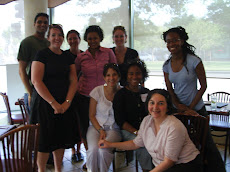


Role Play Activity-Bell Multicultural School
Summer 2009 Class
Final Activity Eval - Metro TeenAIDS
Summer 2008 Class
Blog Archive
What is this all about?
- Adolescent Health Class GW
- Washington, DC, United States
- This course will emphasize techniques and strategies to work with pre-adolescents and adolescents in health promotion, specifically by applying theory to practice. Students will be introduced to community-based organizations located in Washington DC that provide services to young people from diverse backgrounds. They will apply the techniques and strategies for health promotion learned in class to workshops that they themselves will design and facilitate at these organizations.
No comments:
Post a Comment